Rog Chakram Honest Review — Is the Hype Justified?
I've owned the ASUS ROG Chakram for several months now and I've used it daily for a mix of activities: competitive shooters, long strategy sessions, a few racing sims, and plenty of desktop work. I bought it because the joystick-on-a-gaming-mouse idea sounded like something that would change how I play, and because ROG's design language is one I generally trust. What I found was a very interesting piece of engineering that delivers some genuinely useful innovation — but also a few compromises that keep it from being perfect.
Introduction — why I picked the Chakram
When I decided to upgrade my mouse, I was looking for two things: a comfortable, reliable shape I could use for hours, and something that offered more programmable control than a standard two-button thumb area. The Chakram's built-in thumb joystick was the headline feature that drew me in. Over the last few months I’ve tested it in real-world scenarios (not just a single review benchmark): daily gaming sessions, multitasking at work, and travel days when I wanted a single mouse that could do everything.
Design & build: solid, distinct, and a little heavy
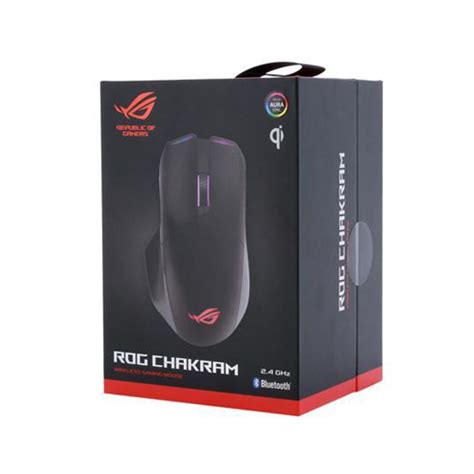
Right out of the box the Chakram feels well built. The materials are what you'd expect from a high-end gaming mouse — firm plastics, a matte finish across most of the body, and an RGB ring that adds a bit of flair without being obnoxious. The mouse has a definite right-hand bias and settles into a palm or relaxed claw grip nicely. If you use a fingertip grip, you might find the body a touch too tall for your preference; in my case, palm grip felt most natural.
One thing I appreciated was the tactile quality of the main buttons and the clickable middle wheel — they have that satisfyingly crisp feel that makes long sessions feel less fatiguing. The thumb joystick assembly sits where you'd expect: easy to reach but not so exposed that you brush it constantly. The joystick cap itself is rubberized and offers decent grip, although after months of use the texture became slightly smoother — not a dealbreaker, but noticeable if you like things to stay brand-new-feeling.
Joystick: genuinely useful, but with caveats
The joystick is the Chakram's signature feature, and in my experience it lives up to the hype for certain use cases. I mapped it to weapon switching and quick utility binds in FPS games and it worked wonderfully: intuitive, fast, and it kept me from reaching for the keyboard in fast moments. Where it really shone was in driving and flight sims — the analog range lets you fine-tune steering or throttle in a way a regular D-pad or extra button can't match.
That said, the joystick is not a universal win. In fast-paced games where you flick constantly, I found myself accidentally nudging it sometimes, which caused a few unintended actions. The sensitivity and deadzone settings in the software mitigate this, but it's something I had to spend time tuning. Also, mapping complex macros to the joystick felt less natural than using the mouse's extra side buttons in some situations — the joystick's real strength is analog input and single-direction quick actions, not multi-key combos.
Performance: tracking, latency, and button feel
In both wired and wireless use the Chakram performed smoothly. Tracking was accurate on my usual mousepad and I didn't notice skips or jitters during play. Wireless connection stayed rock-solid in my home setup; I didn't experience drops or sudden lag spikes while gaming. When I switched to wired mode for charging or for tournaments, the cable is detachable and feels sturdy.
The main buttons remained consistent over months of heavy clicking, and the side buttons registered reliably. My only complaint here is the weight: the mouse feels a bit heavier than some competing gaming mice, especially when you add a dongle in transit. That extra heft is comfortable for precision aiming in slow-paced scenarios, but it can be a minor downside for those who favor feather-light mice for twitch-based play.
Software: customization with a learning curve
I used ASUS's Armoury Crate to configure the Chakram, and the software offers deep customization. I was able to remap every button, create multi-stage DPI profiles, adjust joystick deadzones and sensitivity, and tune RGB. The macros and profile management are robust — I created different setups for FPS, RTS, and productivity tasks, and switching between them was seamless.
Discover deals on Electronics — updated daily.
View Offers →The drawback is that Armoury Crate is extensive enough to be intimidating at first. It took me a couple of sessions to understand how joystick sensitivity, deadzones, and button layering interact. The software is also somewhat heavy compared to lightweight utilities other brands ship, which matters if you prefer minimal background processes.
Battery life and charging
In my usage, the Chakram comfortably handled multiple gaming sessions between charges. With RGB set to a medium brightness I could go days of gaming before hitting low battery; if I turned RGB off and optimized power settings, the gap between charges stretched even longer. Charging via the included cable is straightforward and the mouse is fully usable while charging.
One small practical annoyance: if you're someone who frequently moves your mouse between desks, keeping track of the wireless dongle can be fiddly. ASUS includes a secure place to store it, but I still found myself checking that it wasn't rattling around in my bag.
Ergonomics & comfort — long sessions tested
I've used the Chakram for several 4–6 hour sessions and noticed no hand cramping or unusual soreness. The thumb rest is nicely contoured and provides a stable anchor for both aiming and joystick manipulation. People with very small hands might find it too large, while those with very wide hands may want more width. The coatings resist sweat reasonably well; after long sessions the mouse stayed grippy rather than slick.
Real-world use cases — where Chakram shines and falls short
Where it shines:
- Multiplayer shooters where quick weapon swaps or utility binds save time — the joystick is fast to reach and intuitive.
- Racing and flight sims — analog joystick input adds a dimension that many mice don't offer.
- Productivity shortcuts — I mapped window management macros and volume controls for work sessions and found them genuinely useful.
Where it falls short:
- Ultra-lightweight mouse fans — the Chakram's weight is noticeable and might hamper flick-intensive playstyles.
- Users who dislike complex software — Armoury Crate is powerful but not minimal.
- Those who work across multiple machines — while profiles can be saved to onboard memory, the joystick tuning feels best when managed through the full software suite.
Pros & Cons
- Pros:
- Innovative and functional thumb joystick that expands control options
- Solid build quality and comfortable ergonomic shape for palm/claw grips
- Reliable wireless performance with a straightforward wired fallback
- Deep customization through Armoury Crate (buttons, joystick, DPI, RGB)
- Onboard memory for profiles so you can take your settings to another PC
- Cons:
- Heavier than many current competitive mice
- Joystick can be accidentally activated without careful deadzone tuning
- Software is powerful but somewhat heavy and initially confusing
- Thumb cap texture softened slightly after months of use
Comparison — Chakram versus a few familiar alternatives
| Feature | ROG Chakram | Logitech G502 (typical comparison) | Razer Basilisk (typical comparison) |
|---|---|---|---|
| Grip Type | Palm / Claw — taller profile | Palm / Claw — medium profile | Claw / Palm — ergonomic thumb rest |
| Extra Controls | Thumb joystick + multiple side buttons | Multiple programmable buttons + adjustable weight | Programmable buttons + scroll wheel clutch |
| Wireless | Yes (stable wireless + wired) | Some models wireless, some wired | Some models wired or wireless depending on SKU |
| Customization | Deep (Armoury Crate) — joystick tuning | Very deep (Logi software) — profiles, weights | Deep (Synapse) — button mapping, sensitivity |
| Best for | Users who want an extra analog input and ROG ecosystem | Users who want many buttons and tuning options | Users who prefer a refined ergonomic thumb area |
| Relative weight | Medium-heavy | Medium (adjustable on some models) | Medium |
Buying guide — what to consider before you buy
If you're thinking about the Chakram, here are the key things I recommend evaluating based on how I used it:
1. Do you actually want a joystick on your mouse?
Think about the games and workflows you use. If you play a lot of racing, flight sims, or games where analog input or quick thumb actions are useful, the joystick can improve your experience. For pure aim-focused shooters where every gram and millisecond matters, assess whether the extra functionality offsets the slightly heavier feel.
2. Grip style and hand size matter
Try to test the mouse in-store if possible. The Chakram suits palm and relaxed claw grips best. If your hands are small or you prefer fingertip grips, the body might feel bulky.
Shop the latest Electronics picks on Amazon.
Browse Now →3. Software comfort
Armoury Crate unlocks the Chakram's potential, but you'll need to invest some time in learning its layout. If you prefer plug-and-play minimalism, be prepared for an initial setup session.
4. Wireless vs wired priorities
If you need absolute lightness and the least possible latency, consider wired-focused mice. The Chakram's wireless is excellent for most players, but it leans toward a balanced approach rather than function-first minimal weight.
5. Longevity and practical concerns
Think about how you'll transport and store the mouse. The joystick cap is durable, but if you toss the mouse casually into a bag, you may notice cosmetic wear over time. Also consider whether you want built-in profile memory and whether your ecosystem prefers ASUS software.
Final verdict — is the hype justified?
After months of using the ROG Chakram, I can honestly say the hype is mostly justified — but with important caveats. The joystick is not a gimmick; it adds real, usable functionality that changed the way I play certain games and manage desktop workflows. The mouse is comfortable, well built, and performs reliably in both wireless and wired modes.
That said, it's not the universal upgrade for every gamer. If you chase the lightest possible mouse for pure twitch aiming, or you dislike feature-heavy software, the Chakram might feel like overkill. I also had to spend some time with the joystick deadzone and sensitivity settings to avoid accidental inputs, and I noticed minor cosmetic wear on the joystick cap after steady use.
In my experience, if you want a versatile mouse that experiments productively with a new input method and you value customization and comfort more than absolute minimal weight, the Chakram is an excellent choice. It brought meaningful day-to-day improvements to my play and productivity, even if it demands a bit of setup and tolerance for its quirks.
Overall — yes, the Chakram's hype is justified for the right audience. For me, it's earned a permanent spot on my desk because it offers something genuinely different that I actually use.