Q60B Q60 Q60Bd Qled Review: Real User Experience After 3 Months
Selecting a new television in today’s saturated market felt less like an upgrade and more like a part-time job. After weeks of comparing panel types, refresh rates, and price points, I finally settled on the Samsung Q60B (which is functionally identical to the Q60 and the Q60Bd variants found at big-box retailers). I wanted something that bridged the gap between basic LED displays and the eye-wateringly expensive OLED models. Now that I have lived with this 4K QLED for exactly ninety-two days, I feel I can finally cut through the marketing jargon and tell you what it is actually like to own, watch, and occasionally argue with this piece of technology.
When I first unboxed the unit, my initial impression was centered on the "AirSlim" design. It is remarkably thin for a TV in this price bracket. I remember thinking as I mounted it to my wall that it looked far more premium than the price tag suggested. However, as any long-term owner knows, the honeymoon phase with a screen’s physical appearance ends the moment you turn it on and start digging into the software. Over the last three months, I have used this TV for everything: late-night Netflix binges, Saturday afternoon football, casual gaming on a PS5, and even as a giant monitor for a few work-from-home sessions. My experience has been a mix of genuine "wow" moments and a few "why did they do that?" frustrations that only surface after the return window has closed.
The Visual Reality: Quantum Dots vs. Real-World Lighting
The headline feature of the Q60B is, of course, the Quantum Dot layer. In my experience, this isn't just a buzzword; there is a tangible difference in how colors are rendered compared to the standard UHD Samsung I had previously. During the first week, I was struck by the "pop" of primary colors. I watched a few nature documentaries, and the greens of the rainforest and the deep blues of the ocean felt incredibly "wet" and vibrant. Samsung’s Dual LED backlighting—which uses both cool and warm LEDs—does a decent job of adjusting the color tone to match the content. When I’m watching a warm, cinematic film like Oppenheimer, the skin tones look natural rather than washed out.
However, after a month of viewing, I started to notice the limitations of the "edge-lit" system. Since there is no local dimming, the TV struggles with deep blacks in a dark room. I noticed this most prominently during the campfire scenes in The Ritual. Instead of a pitch-black forest background, I saw a dark grayish haze. This is the trade-off for the slim design and lower price point. If you are a cinephile who watches movies in a blacked-out basement, the lack of "true blacks" might bother you. In my living room, which gets a fair amount of afternoon sun, the Q60B actually performed better than I expected because the peak brightness is high enough to fight off most reflections. I didn't find myself squinting during bright day scenes, which was a huge relief.
Interface and Navigation: A Love-Hate Relationship
I have to be honest: the Tizen OS update on the Q60B was a major point of contention for me during the second month. Samsung moved to a full-screen home menu, replacing the unobtrusive ribbon at the bottom of the screen from previous years. When I press the home button, it completely interrupts whatever I’m watching. I found the interface to be a bit sluggish at times, especially right after turning the TV on. There’s a three-to-five second "warm-up" period where the remote clicks don't seem to register, which can be annoying when you’re just trying to get to YouTube quickly.
On the positive side, I grew to love the SolarCell Remote. I haven't had to look for a pair of AA batteries once since I bought it. It charges from the ambient light in my living room, and if it ever gets low, I just plug it into a USB-C cable for a few minutes. It is tiny, minimalist, and honestly feels like the future of remotes. I was worried the lack of numbers would be a problem, but I quickly realized I do 99% of my navigation through the smart apps anyway. The voice control via Alexa is surprisingly responsive; I frequently use it to "Open Netflix" or "Search for 4K fireplace videos" when I’m feeling lazy.
Looking for the best TVs & Home Theater deals on Amazon?
View Offers →Gaming Performance: Managing Expectations
As someone who enjoys gaming, I spent a lot of time testing the Q60B’s "Game Mode." Since this is a 60Hz panel, you aren't going to get that buttery-smooth 120fps experience found on the Q70 or Q80 series. For casual games like Stardew Valley or God of War, I found the performance perfectly adequate. The input lag is remarkably low, meaning the characters react the instant I move the stick. I noticed the TV automatically switches to Game Mode the second I turn on my console, which is a nice "set it and forget it" feature.
The "Game Bar" is a feature I actually used more than I thought I would. It allows me to see the current input lag and adjust the screen ratio or HDR settings on the fly. However, I did notice some "motion blur" during fast-paced shooters. If you are a competitive gamer who plays Call of Duty or Apex Legends at a high level, you might find the 60Hz limitation frustrating. But for my lifestyle—where gaming is a secondary hobby—it hasn't been a dealbreaker.
Audio Quality: The Hidden Weakness
After about two weeks, I realized that the internal speakers are the weakest link of the Q60B. Because the TV is so thin, there simply isn't enough physical space for speakers to produce any meaningful bass. I was watching Top Gun: Maverick, and the roar of the jet engines sounded more like a loud hum. The "Object Tracking Sound Lite" feature tries to move the audio around the screen based on the action, but in my experience, it’s a very subtle effect that doesn't make up for the lack of depth. I eventually gave in and bought a Samsung soundbar to take advantage of "Q-Symphony," which allows the TV speakers and the soundbar to play together. This made a massive difference; if you’re planning on buying this TV, I strongly suggest budgeting for at least a basic soundbar.
Comparison of Variants
I feel it is important to clarify the differences between the Q60B, Q60, and Q60Bd. When I was shopping, I was confused by these suffixes. After doing some digging and talking to floor reps, I discovered they are essentially the same TV. The "Bd" is usually a specific model number for warehouse clubs like Costco or Sam's Club, often coming with a longer warranty or a different color bezel. In terms of the panel quality and the processor, they are identical.
| Feature | Q60B / Q60 / Q60Bd | Standard 4K LED (Crystal) | High-End QLED (Q80B) |
|---|---|---|---|
| Display Technology | QLED (Quantum Dot) | Standard 4K LED | QLED w/ Local Dimming |
| Refresh Rate | 60Hz | 60Hz | 120Hz |
| Backlighting | Dual LED (Edge-Lit) | Basic Edge-Lit | Full Array Local Dimming |
| Remote Control | SolarCell Remote | Standard Battery Remote | SolarCell Remote |
| HDR Support | Quantum HDR (HDR10+) | Basic HDR | Quantum HDR 12x |
What I Liked (The Pros)
- Vibrant Color Accuracy: The Quantum Dot technology really delivers on its promise. Even after three months, I still find myself impressed by the richness of the colors in 4K HDR content.
- Impressive Brightness for the Price: It handles a moderately bright room very well. I don't have to close my curtains in the middle of the day just to see what's happening on screen.
- The SolarCell Remote: It’s a small detail, but never having to buy batteries again is a major quality-of-life improvement. Plus, it’s environmentally friendly.
- Physical Design: The TV is thin enough that it looks like a piece of art when mounted. The "Simple Stand" also allows you to adjust the height, which was helpful when I needed to fit my soundbar underneath.
- Energy Efficiency: I noticed that this TV runs much cooler than my old 1080p set, and the eco-features actually seem to work without dimming the screen to unreadable levels.
What Bothered Me (The Cons)
- The Tizen OS Interface: The full-screen menu is cluttered with "recommended" content and advertisements that I can't easily turn off. It feels slower than it should for a modern TV.
- Edge-Lit Limitations: In very dark rooms, you will see "light bleed" in the corners and grayish blacks. It is simply not an OLED-level experience.
- 60Hz Refresh Rate: It’s fine for movies and TV, but it lacks the ultra-smooth motion that gamers often look for in 2024/2025.
- Internal Audio: The speakers are thin and "tinny." High frequencies are clear enough for news and dialogue, but music and action movies lack any punch.
- Viewing Angles: I noticed that if I sit too far to the side (when I have friends over for a game), the colors start to shift and look a bit washed out. You really want to be sitting directly in front of this TV.
Buying Guide: Is the Q60B Right for You?
After three months of living with this set, I’ve realized that this TV occupies a very specific niche. It is for the "mid-range" buyer who wants a significant step up from the budget-bin TVs found at grocery stores, but who isn't ready to drop two thousand dollars on a flagship OLED or Neo-QLED.
I would recommend this TV if your primary use case is watching streaming services, sports, and casual cable TV in a room with some natural light. The Quantum Dot technology provides a "premium" color feel that you just won't get on a standard LED. If you have a bright living room, this is actually a safer bet than some cheaper OLEDs which can struggle with glare.
Find top-rated TVs & Home Theater products at great prices.
Browse Now →I would not recommend this TV if you are building a dedicated home theater. The lack of local dimming is a dealbreaker for anyone who wants to watch Batman movies or space epics in total darkness. Similarly, if you own a Next-Gen console and the "120Hz" badge is important to you, you should skip the Q60B and look at the Q70 series or above. You’re paying for the color here, not the motion processing.
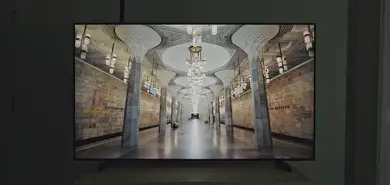
One tip I learned through trial and error: when you first set up the TV, go into the "Expert Settings" and turn off the "Intelligent Mode" or "Brightness Optimization" if you find the screen dimming randomly. I spent the first week annoyed that the screen would get dark whenever I turned a lamp on, but once I disabled the auto-sensor, the brightness stayed exactly where I wanted it.
Conclusion
My three-month journey with the Q60B (Q60/Q60Bd) has been largely positive. It isn't a perfect television, but I don't think it's trying to be. What it does well—color vibrancy, brightness, and aesthetic design—it does exceptionally well for the price point. I’ve reached a point where I don't even think about the "tech" anymore; I just enjoy the shows I’m watching, which is perhaps the best compliment I can give a piece of home electronics.
The frustrations I encountered, such as the sluggish Tizen interface and the weak speakers, were easily mitigated with a soundbar and a bit of patience. While I sometimes find myself eyeing the deep blacks of my neighbor’s OLED, I look at my bank account and the vibrant, Punchy HDR of my Q60B and feel like I made the right choice. It is a workhorse TV that brings "luxury" colors into a realistic budget, and for most people, that is exactly what they are looking for.