5 Hidden Features of the E9 Oled You Must Know About
The E9 Oled has earned attention from AV enthusiasts and mainstream buyers alike for its deep blacks, wide color gamut, and elegant design. While many buyers focus on headline specs like “OLED” or “4K,” the E9 hides several practical features in its menus and firmware that materially improve everyday viewing — if users know where to look. This article explores five lesser-known capabilities, explains when they matter in real-world use, and provides a detailed review, pros & cons, a comparison table, and a buying guide to help prospective buyers evaluate whether the E9 Oled is the right fit for their living room or home theater.
Introduction: Why hidden features matter
Modern TVs ship with dozens of settings and tunable options. Some are obvious — picture mode, brightness, and input selection — while others are tucked behind advanced menus or service panels. For buyers who stream movies, play fast-paced video games, or install the TV in a bright room, these hidden features can improve color fidelity, reduce input lag, protect the panel, and make the TV easier to integrate with soundbars and consoles. The E9 Oled includes several such features that help it perform better in specific, real-world scenarios.
5 Hidden Features of the E9 Oled
1. Expert Picture Tuning (expanded color & white balance controls)
Beyond the standard picture modes, the E9 exposes an advanced expert tuning section that allows precise adjustment of white balance (two-point and multi-point tuning), color management (hue/saturation/per-channel), and gamma tables. For users who care about accurate reproduction — for example, cinephiles who stream HDR films or photographers who review images — these tools let a skilled calibrator or informed owner reduce common tinting issues and tailor the display to viewing conditions.
Real-world use case: a movie enthusiast who watches in a dark home theater can switch to an expertly calibrated profile that preserves shadow detail and renders skin tones more naturally than the out-of-box “Vivid” preset. Many buyers will never access these menus, but a one-time calibration (either by a professional or using a calibration disc and some patience) unlocks much of the E9’s potential.
2. Per-Scene HDR Tone Mapping
HDR content varies dramatically in peak brightness and mastering. The E9 includes a dynamic tone-mapping mode that analyzes frame content and adjusts clipping and highlight presentation on a scene-by-scene basis. Unlike static HDR rendering that can crush highlights or clip specular details, this adaptive approach aims to preserve highlight detail while maintaining overall contrast.
Real-world use case: when watching modern streaming originals that contain extreme HDR peaks (bright explosions, sun glints, or studio-graded highlights), the E9’s tone mapping produces fewer blown-out highlights and retains more texture in both bright and shadow areas. This is particularly useful for viewers who prefer the cinematic intent of HDR without manually toggling settings for each title.
3. Hidden Game Optimizer and Input-Specific Settings
The E9’s game-related features go deeper than a simple “Game Mode.” There’s an input-specific optimizer that can be configured per HDMI port: engage low-latency processing for a console, enable enhanced motion interpolation for a PC, or set a custom color profile for a streaming device. The TV also exposes variable refresh rate (VRR) and auto low-latency mode (ALLM) options in a menu that’s easy to miss.
Real-world use case: a household that shares the TV for console gaming, PC gaming, and movie nights can create distinct profiles for each HDMI input. When the console wakes, the E9 can automatically switch to the low-latency profile and enable VRR; when a 4K Blu-ray player is selected, it can revert to a picture-prioritized mode with dynamic tone mapping.
4. Adaptive Acoustic Processing and Room-Aware Sound Modes
While the E9’s default sound modes serve most viewers, the TV includes an adaptive audio feature that analyzes room acoustics and adjusts equalization and virtual surround processing. In many cases this setting is off by default or buried inside an “Audio Advanced” submenu. There’s also a separate passthrough/eARC configuration panel that lets users control whether the TV processes audio (for dialogue enhancement) or simply passes DTS/Atmos bitstreams to an external AVR without alteration.
Real-world use case: users who sit close to the screen or have reflective walls can enable the room-aware mode to reduce harsh treble peaks and emphasize midrange dialogue. People using an external soundbar and AVR can use the eARC bitstream options to ensure a lossless multichannel experience or to let the TV handle basic sound processing for late-night listening.
Shop the latest TVs & Home Theater picks on Amazon.
Browse Now →5. Panel Maintenance Tools and Burn-In Mitigation
OLED displays require mindful operation to minimize the risk of image retention or burn-in. The E9 includes several preventative tools — pixel refresh/reorganization utilities, logo luminance limiter, automatic pixel shift, and scheduled screen-blank timers — designed to prolong panel longevity. These features are often tucked into maintenance or system menus and are easy to overlook.
Real-world use case: a buyer who uses the TV as a daily PC monitor or watches channels with static logos for long durations can enable automatic pixel shift and schedule periodic pixel refresh cycles to reduce uneven wear. For owners worried about long-term use in a family room or sports bar environment, these options are worth setting during initial setup.
Detailed Product Review and Analysis
Picture Quality and Panel Characteristics
The E9 Oled delivers the deep black levels and infinite contrast that define OLED technology. Blacks are uniformly inky with excellent shadow detail when paired with proper calibration or the TV’s Expert Picture mode. Colors are vivid without appearing oversaturated in the default “Standard” mode, and the panel’s gamut coverage supports popular HDR formats.
Motion handling is generally excellent thanks to the TV’s processing pipeline. For fast sports and gaming, enabling the appropriate motion smoothing or the dedicated game optimizer reduces blur without introducing obvious soap-opera artifacts when set conservatively.
HDR and Tone Reproduction
Per-scene tone mapping makes HDR content more watchable across a wide range of titles. The E9 aims to retain specular highlights while preventing shadow crush, which results in more consistent HDR performance across streaming services, UHD Blu-rays, and game HDR. That said, maximum sustained brightness for bright-room viewing may not match high-end LED mini-LEDs; for very bright living rooms, anti-reflective treatments and room lighting will still matter.
Gaming and Latency
Input lag in the E9 is competitive when Game Mode is activated and the game optimizer is configured. The presence of VRR and ALLM support addresses stutter and variable frame rate issues on modern consoles and GPUs. Users should verify HDMI 2.1 features are enabled and test with their console’s performance modes to maximize responsiveness.
Smart Platform and Connectivity
The E9’s smart platform offers common streaming apps and enough processing power to run them smoothly. Connectivity is robust: multiple HDMI inputs (with advanced features available per input), eARC for high-quality audio output, and Wi‑Fi plus Ethernet for streaming stability. Power users can hide devices behind the TV and label inputs for quick identification via the input-specific profiles.
Build Quality and Design
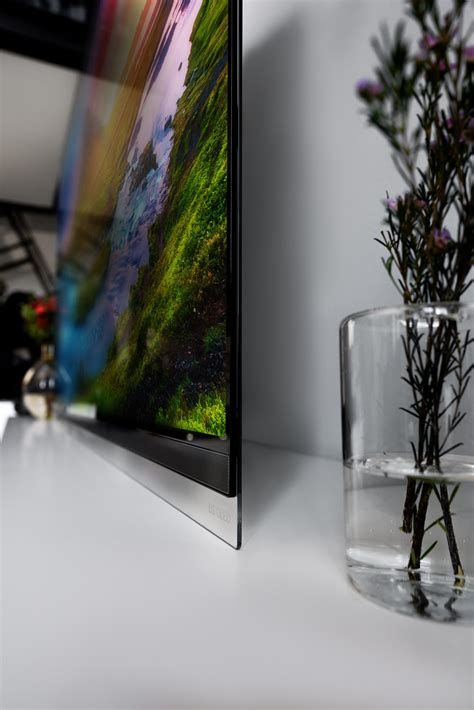
The E9’s industrial design emphasizes slimness and an elegant bezel treatment. Materials and stand choices are premium, and cable management options are adequate for consumers who pair the TV with a soundbar or wall-mount setup. For buyers who prioritize a minimalist look, the E9 presents well in both dedicated home theaters and living rooms.
Real-World Reliability and Maintenance
Long-term reliability often comes down to usage patterns. The inclusion of panel protection and maintenance tools helps mitigate risk, but buyers who plan to use the TV as a static-information display or as a PC monitor should apply conservative settings and use the scheduled pixel maintenance options. Warranty coverage and retailer support also remain practical considerations.
Shop the latest TVs & Home Theater picks on Amazon.
See Deals →Pros & Cons
- Pros:
- Exceptional black levels and contrast for cinematic viewing
- Advanced, hidden tuning options for users who calibrate
- Per-scene HDR tone mapping improves highlight detail
- Comprehensive game optimizer with input-specific profiles
- Adaptive audio and eARC passthrough for flexible sound setups
- Maintenance utilities help manage burn-in risk
- Cons:
- Top-level brightness may be lower than some high-end LED alternatives in very bright rooms
- Advanced menus are deep and can be intimidating for casual buyers
- Some hidden settings are not explained in the quick start — calibration may be needed to achieve best results
- Using certain audio passthrough modes can be confusing without eARC knowledge
Comparison: E9 Oled vs. Popular Alternatives
| Feature | E9 Oled | Typical Mid-Range OLED Competitor | High-End Mini-LED Alternative |
|---|---|---|---|
| Contrast & Black Levels | True pixel-level blacks and deep shadow detail | Similar OLED-level blacks | Very good blacks, slightly less perfect than OLED |
| HDR Tone Mapping | Adaptive per-scene tone mapping | Often static or simpler dynamic modes | Powerful local dimming with high sustained brightness |
| Gaming Features | VRR, ALLM, per-input game optimizer | VRR/ALLM present, fewer per-input controls | Full HDMI 2.1 support and low lag |
| Brightness (Sustained) | Excellent for HDR but moderate sustained brightness | Comparable | Higher sustained brightness for bright rooms |
| Built-in Audio & eARC | Adaptive processing and detailed eARC options | Good basic audio, limited room-aware modes | Varies; often designed to pair with separate AV gear |
Buying Guide: What to Consider Before Choosing the E9 Oled
Room and Lighting
OLED excels in dark-to-moderate light environments thanks to its deep blacks and contrast. If the primary viewing room is very bright with lots of window glare, buyers should compare the E9’s anti-reflective performance and consider choosing a larger size or a mini-LED alternative for brighter HDR highlights.
Use Case: Movies, Sports, or Gaming?
- Movie watchers will benefit most from the E9’s deep blacks, expert tuning, and per-scene HDR handling.
- Sports fans should verify motion processing settings and consider enabling conservative motion interpolation for reduced judder while retaining natural motion.
- Gamers should confirm VRR/ALLM and test input-specific game optimizer features with their console or GPU before purchase.
Audio Needs
If the TV will serve as the main audio source, explore the adaptive acoustic modes and dialog-enhancement options. For buyers planning to pair a soundbar or AVR, check eARC compatibility and multichannel passthrough behavior so the audio chain can carry Dolby Atmos or other high-bitrate formats without unnecessary downmixing.
Calibration and Advanced Users
Owners who plan to calibrate should budget for a calibration service or invest time in DIY calibration. The E9’s hidden expert settings reward calibration work, delivering more accurate colors and improved grayscale tracking.
Longevity and Burn-In
OLED panels can be susceptible to image retention if exposed to static content for long periods. Use the panel maintenance tools, enable pixel shift when appropriate, and avoid leaving static logos or HUD elements on screen for prolonged times. For buyers using the TV as a PC monitor, consider rotating content or using screensavers.
Connectivity and Integration
Confirm the number and type of HDMI inputs and whether the E9 allows per-input customization (useful for shared living rooms). If the setup involves an AV receiver or multiple streaming devices, verify that the TV’s HDMI-eARC behavior works well with the chosen sound system.
Practical Tips to Unlock Hidden Features
- Explore the Expert/Advanced picture menus during initial setup; enable the expert picture profile and then fine-tune white balance and color gamut.
- Test the per-scene HDR tone mapping with a selection of HDR titles (streaming and UHD disc) to see which setting looks most natural in your room.
- Create input-specific profiles: name HDMI ports and save a profile for each connected device (console, PC, Blu-ray player).
- Enable scheduled pixel maintenance overnight and turn on logo luminance limiter when watching channels with persistent channel bugs/logos.
- When pairing with external audio, experiment with both TV-processed dialog enhancement and pure passthrough to determine which yields the clearest result for the room.
Conclusion
The E9 Oled delivers the defining strengths of OLED — deep blacks, wide color, and cinematic contrast — and supplementing those strengths are several hidden features that significantly improve the day-to-day experience for informed users. From the advanced expert tuning that unlocks truly accurate color to the per-scene HDR tone-mapping and input-specific game optimizer, these capabilities turn what looks like a great TV into a highly flexible centerpiece for a home theater, a gaming console, or an AV setup with a separate sound system. Buyers who take time to explore the menus and enable maintenance and audio passthrough options will find the E9 both powerful and adaptable to real-world needs.